Compelo
AI broke the signal in hiring.
Compelo is building AI-powered, agentic hiring that raises signal and lowers noise. The ultimate goal: make job searching obsolete.
What I've shipped in research and discovery
I've run 15+ customer interviews, shipped and tested Explore You and Job Matching prototypes with target users, and outlined next steps based on feedback. The MVP is live.
When everyone looks qualified, no one stands out
AI drove the cost of a polished, ATS-beating résumé to near zero: applications per job are up 111% since 2022, from about 116 to 244 (Greenhouse, The Hire Standard 2026). The candidate defaults to spray-and-pray, sending hundreds of applications into the void. The employer is overwhelmed, not knowing who to trust when every résumé reads as an "A+".
The candidate experience
“You can’t know where you’re going until you know where you are.”
Across interviews, the pattern was clear: the discovery and orientation phase of the job search process is a critical step in the job seeker's journey. I am working with customers, teammates, and experts in the field to build a process to ensure this step is acknowledged and integrated into the search experience.
Discovery to delivery
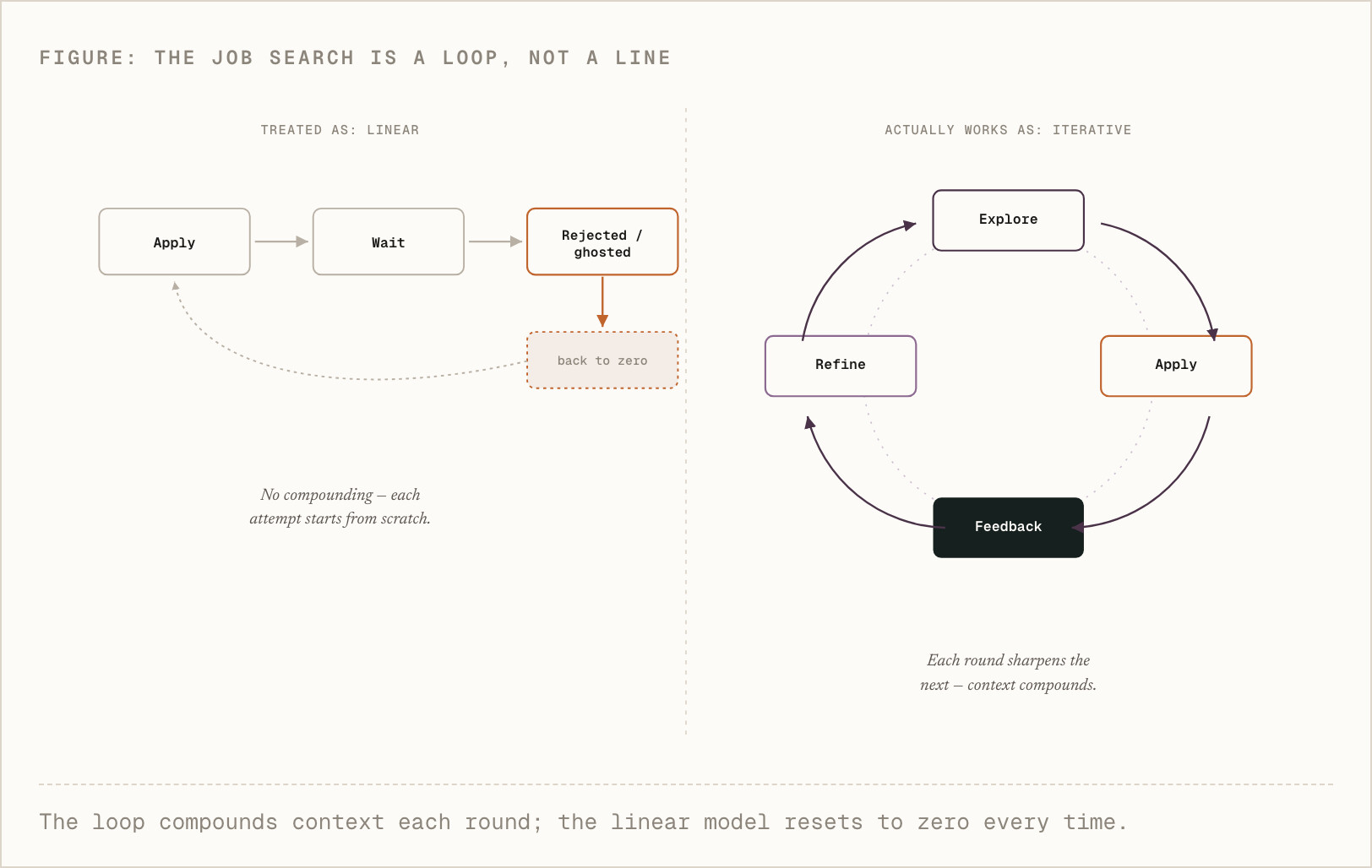
I run a learning loop to keep it disciplined: identify what we need to learn, design the test, coordinate execution with design and engineering, then synthesize the evidence into a decision.
Primary research
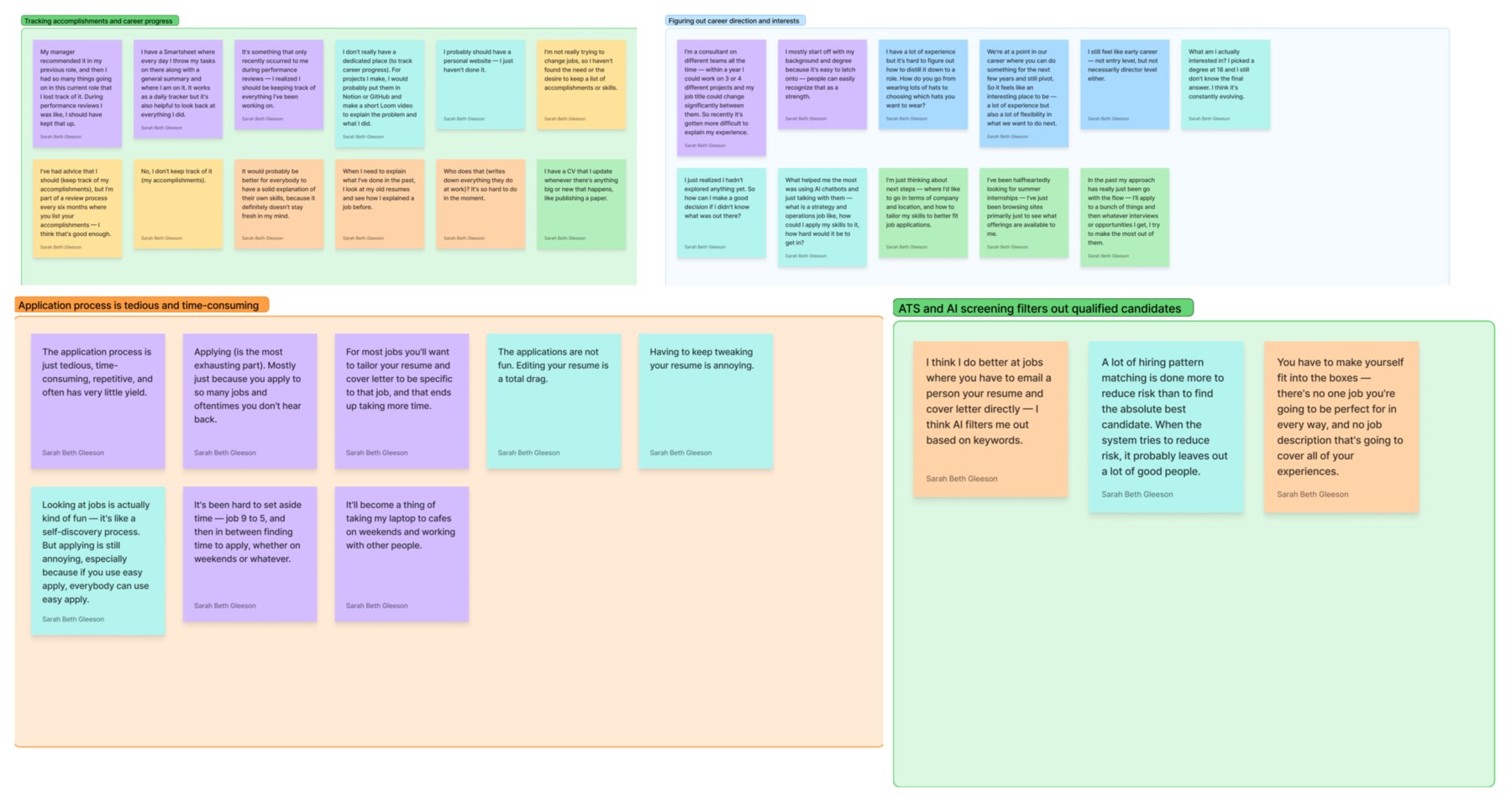
15+ interviews with early-career and transitioning job seekers about the emotional and logistical aspects of their job search.
"I think it's been over 100 applications. I don't even really feel rejected, I just feel confused. Just give me an answer so I can move on. I just want the closure."
"It's really hard to understand if you're doing a good job at job searching, because you don't really get feedback."
"Once you have clarity on what you want, it's just an optimization problem. Your chance of even getting your résumé read for more than 5 seconds is maybe 1 to 2%."
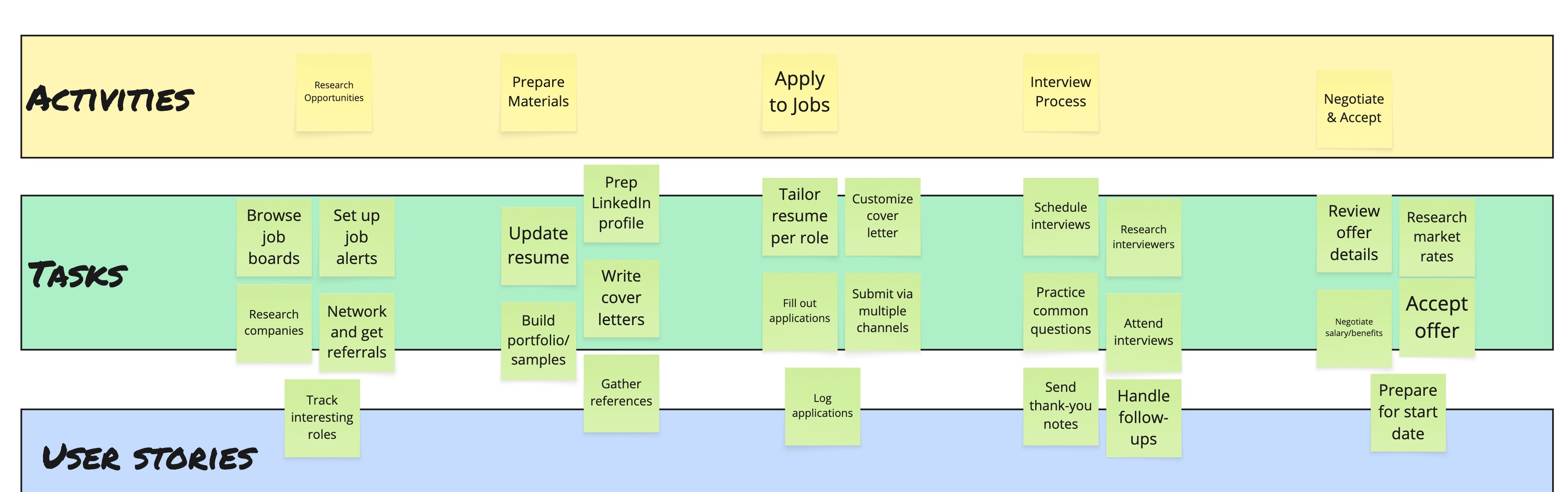
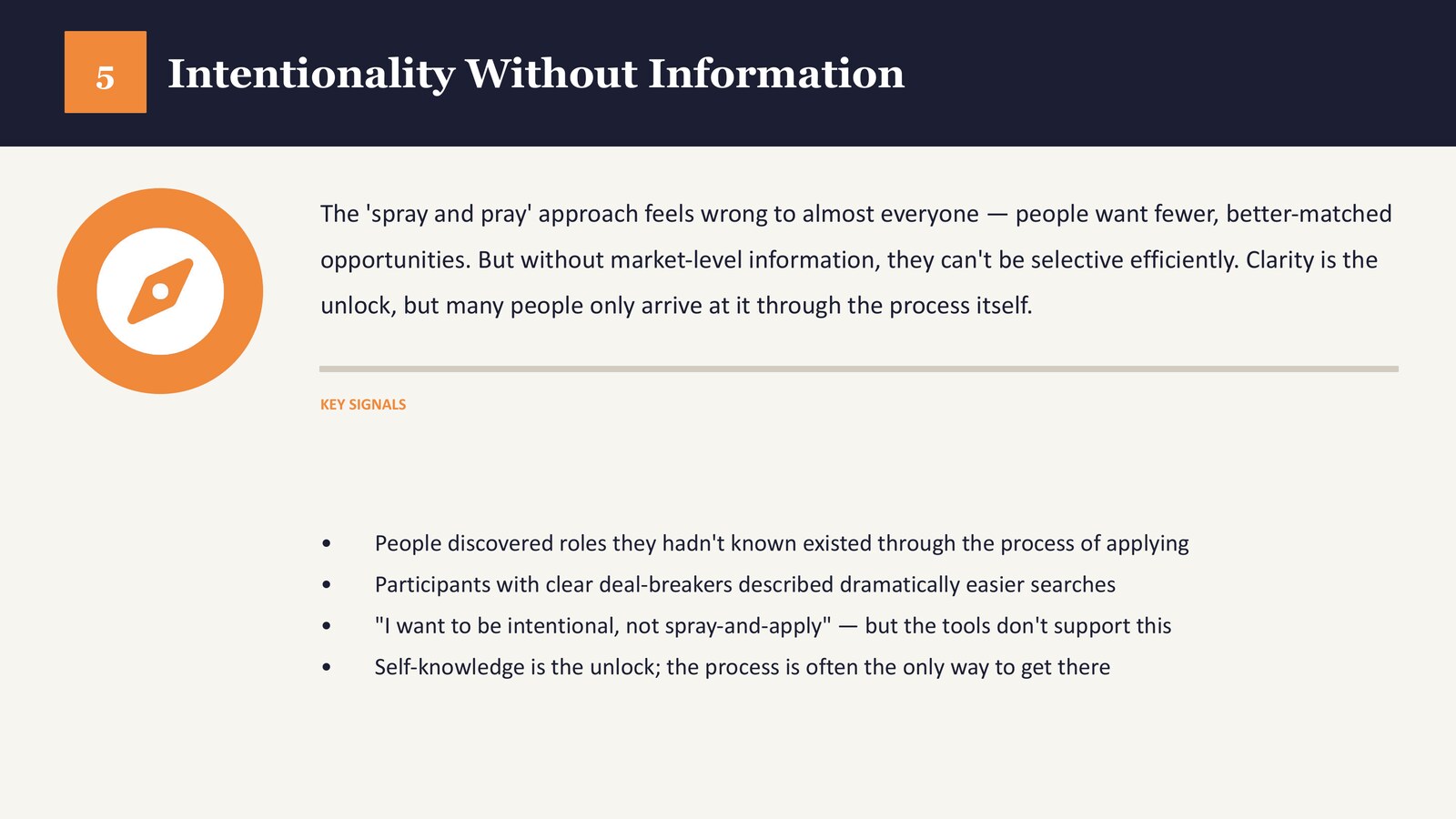
The job search isn't only an execution problem, it's a clarity problem. Overwhelm wasn't about effort; people couldn't read themselves or the market, so every application felt like a guess. The wedge: help people understand and direct their energy, translate that into action, and reflect and get feedback from others, creating their own learning loop.
Solution logic
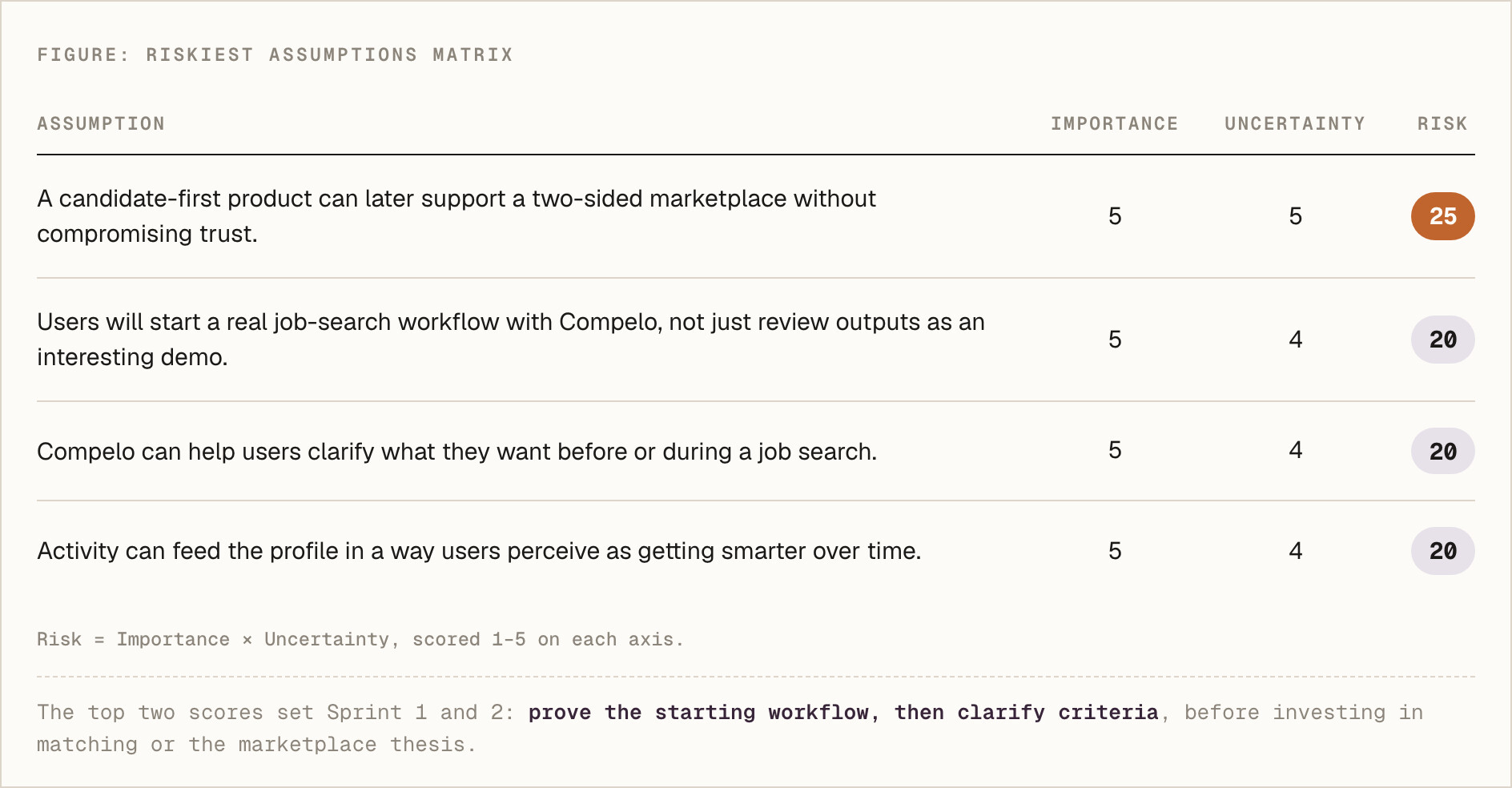
With the riskiest assumptions ranked, I prioritized addressing two sources of overwhelm.
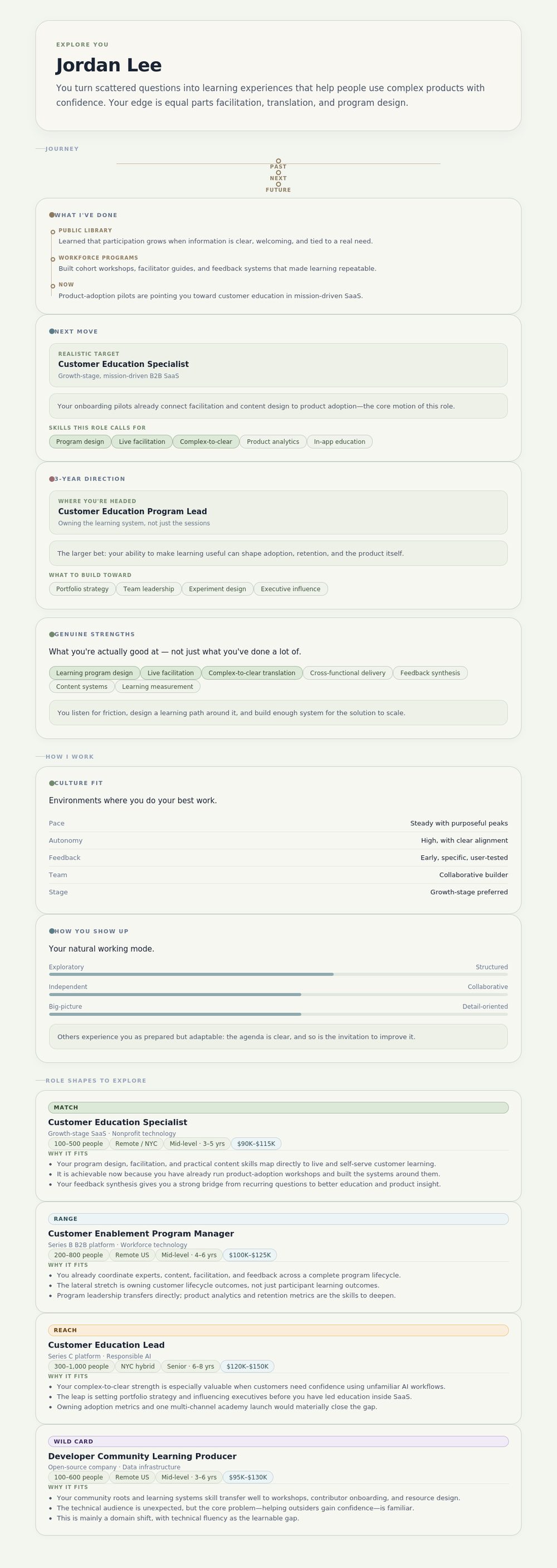
First overwhelm: "I don't know who I am or how I stand." The fix is a process that helps you understand yourself, your work, and your place in the market. That became Explore You: a mirror of your strengths, culture fit, and how you show up, that deepens as you engage in the process.
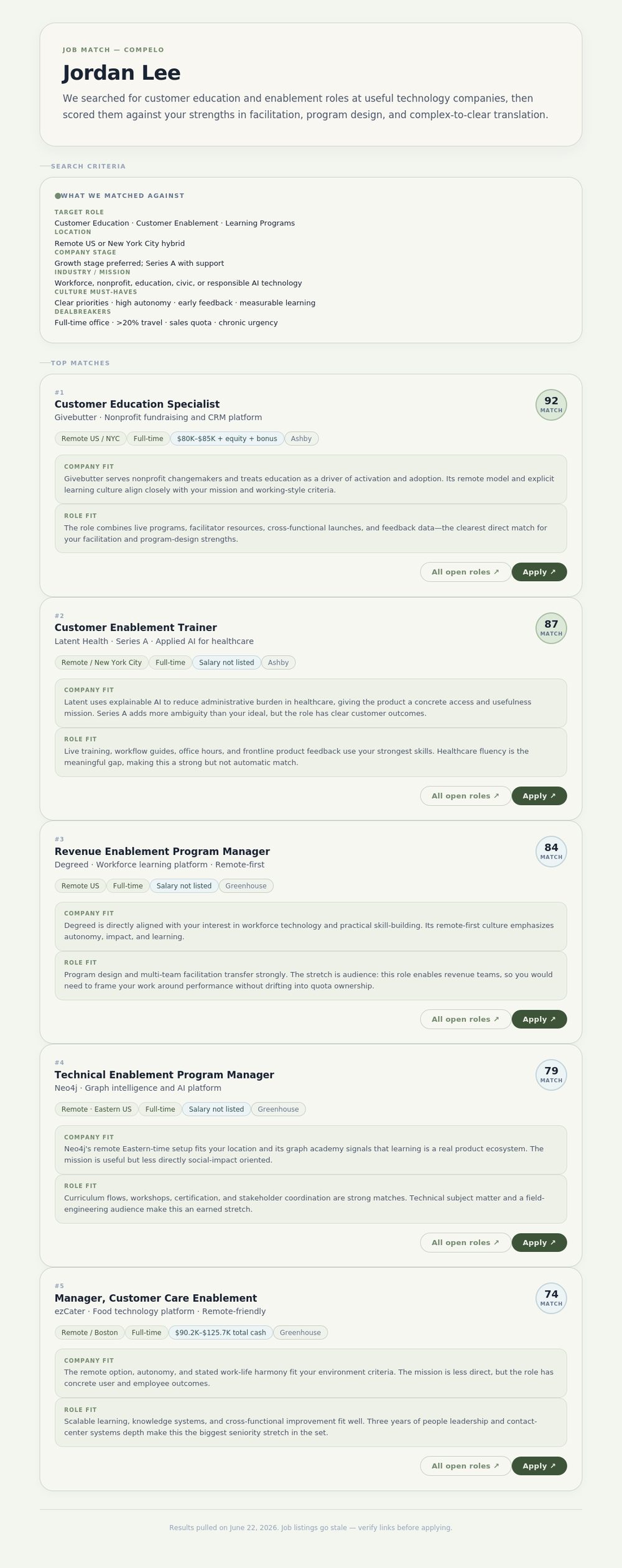
Second overwhelm: "even once I know, finding the right roles is hard." With far more information about a candidate, we can surface better-fit roles, matching that sorts roles into match, range, reach, and wildcard, replacing spraying with a handful of deliberate, aligned applications where you can channel your energy.
Help them start to tell their story. A clear, honest picture of where they are, grounded in the work they have actually done. Self-knowledge first.
Help them aim instead of spray. Replace hundreds of hopeful applications with a few deliberate, well-fit ones. Five good decisions a week beats fifty desperate ones.
Deliberate beats frantic. A few aligned applications a week, each one you can deliberately target and tailor, beats two hundred anxious ones, and it is the same move that raises signal for everyone.
The MVP
Two pillars shipped: Explore You (who you are) and Job Search (where you fit).
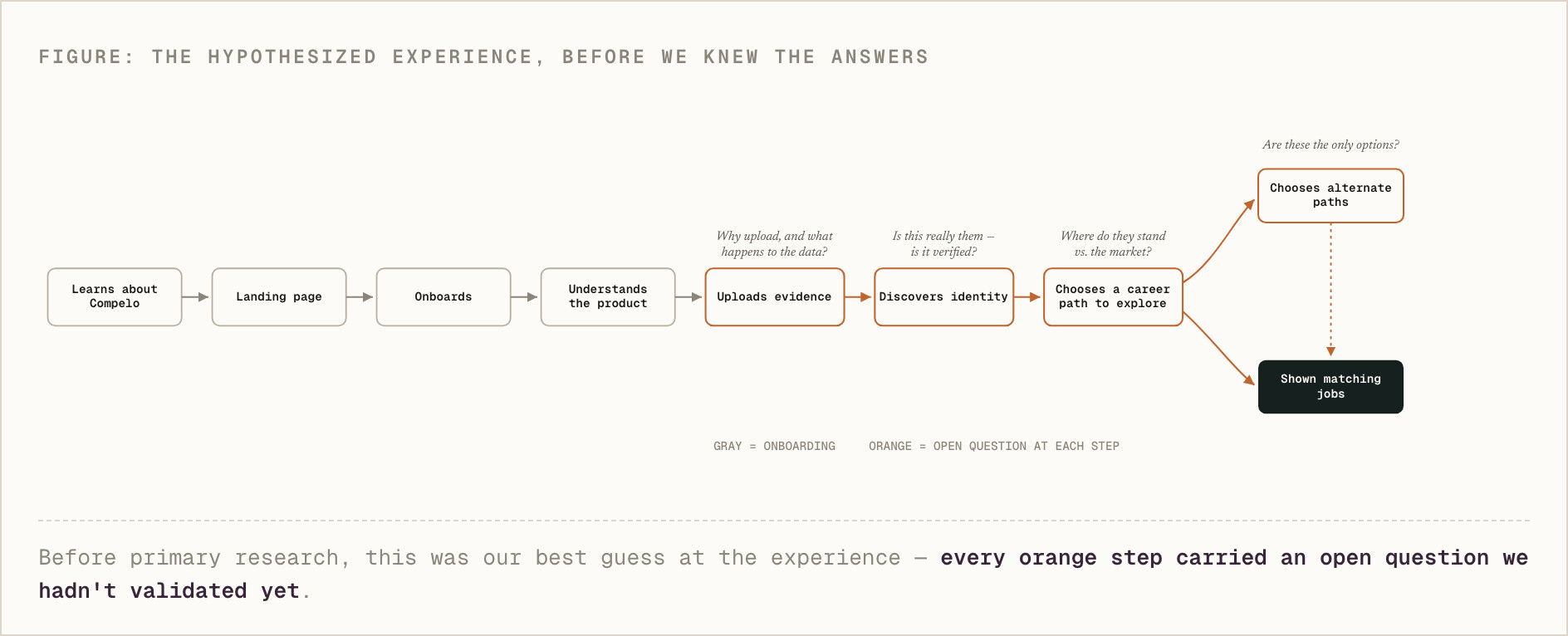
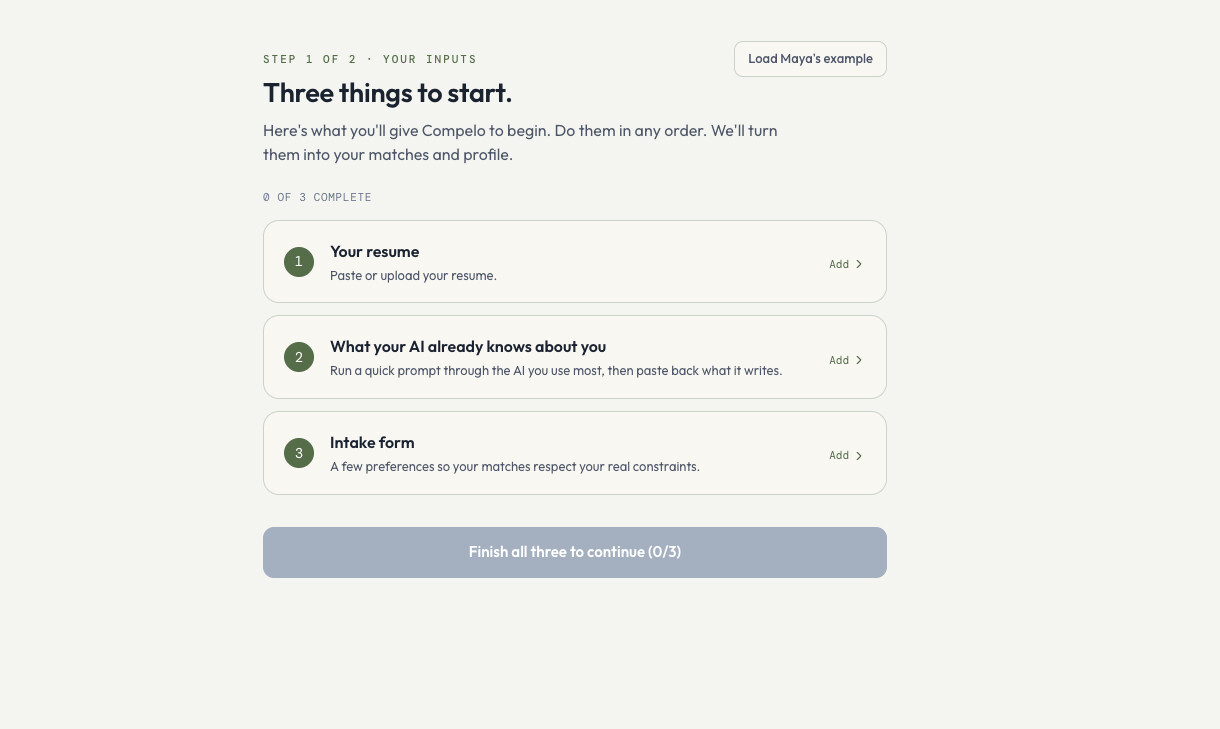
Designing the onboarding was the sharpest design call of the sprint, and a real disagreement. One view: a richer onboarding could deliver value on its own, helping people learn about themselves before any match. The other view: for this test, a heavy onboarding would bury untested assumptions and slow users down before they ever saw a result. We resolved it by starting minimal (a resume plus one low-effort chat input) to reach job results fast, and kept the richer experience as a deliberate later option.
The one thing I would not leave to inference was preferences. Inferred preferences kept missing what actually matters (location, industry, remote or hybrid, several acceptable cities), so I added an intake quiz that collects those criteria explicitly. They then show up in Job Search as "what we matched against," and stay editable, so a candidate can see and correct why a role scored the way it did.
A mirror before a map: a sharp, honest read of your strengths, culture fit, and how you show up, pulled from your real work and history rather than a résumé.
With far more signal about a candidate, Job Search sorts roles into match, range, reach, and wildcard, replacing the spray with a handful of deliberate, aligned applications.
Overall takeaways
- Light onboarding was a good call, but an intake form with explicit questions was necessary for proper filtration and understanding candidate constraints.
- The self-understanding mirror is not a priority: job matching was a clearer, more actionable way for candidates to determine if the system understood them.
- Broken or expired job links eroded trust quickly, making link freshness a first-class concern rather than a polish item.
Each of these is a new assumption, which loops back into Discover + Define for the next round.
Candidate-first now, two-sided next
I want to help candidates find better-aligned roles and apply with intent instead of anxiety by engaging in a research-backed process built for the age of AI.
The objective for this stage is simple: customers start their job search with Compelo.
The idea: context becomes a living profile, the profile generates outputs, real-world feedback sharpens it, and the next recommendation is smarter.